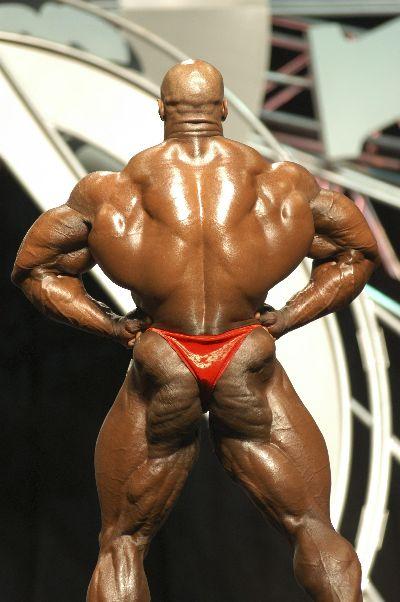
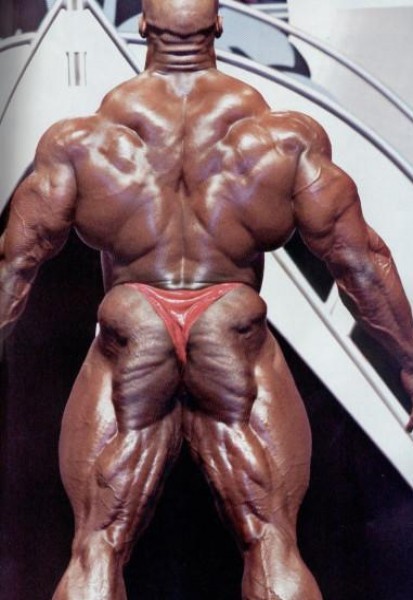
the function of the gluteus muscles (max, min and med) is to eccentrically control hip flexion in the sagittal plane, hip adduction in the frontal plane and femoral/hip internal rotation. If you look at an anatomy picture of the gluteus maximus you will notice that the fiber orientation is primarily in the transverse plane. This baby was designed for femoral/hip rotation (a significant component of lower extremity pronation)Friday, February 24, 2012
Get Your Booty to "Bark"! Muscle Function
the function of the gluteus muscles (max, min and med) is to eccentrically control hip flexion in the sagittal plane, hip adduction in the frontal plane and femoral/hip internal rotation. If you look at an anatomy picture of the gluteus maximus you will notice that the fiber orientation is primarily in the transverse plane. This baby was designed for femoral/hip rotation (a significant component of lower extremity pronation)Sunday, February 19, 2012
What Do the Adductor Muscles Really Do?
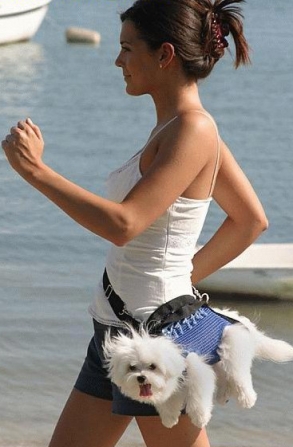
The adductors (generally) attach proximally to the pubic bone and distally attach to the posterior medial aspect of the femur, giving them their mechanical advantage in the sagittal plane. In single leg stance or the single leg phase of gait running or kicking they work with the gluteus medius and the quadratus lumborum to stabilize the pelvis and limb in the frontal plane on the stance side. Now, in activities such as gymnastics, ballet, and karate where the leg is lifted or rapidly "thrown" out to the side the adductors will actually adduct the leg to bring it back into position to hit the ground.
Friday, February 17, 2012
Secret Weapon to Burn Fat and Pump Your Muscless
Monday, February 13, 2012
Stop Making Excuses Not to Exercise!
Saturday, February 11, 2012
Got Magnesium? I Hope So!
Shoulder Pain? Its Not Always the Shoulder!
Tuesday, February 7, 2012
Are You Still Doing Sit Ups?...Really??
Many years ago the sit up was king of abdominal training. Today in the world of rehab, function and performance training the tide has shifted away from the sit up. Our study of the human body, how it works and how it responds to various training modalities has led to a shift in our training methods. Also, Stuart McGill PhD has shown the shear and compressive forces on the lumbar discs while doing a sit up to be quite detrimental to the health of the spine. Now, we don’t just train the “stomach,” we see the body as a link system and the trunk, front, side, back and hips collectively make up what is now referred to as the “core.” Most abdominal activity occurs while in the upright position working against gravity, ground reaction forces and momentum. In fact clinicians and trainers, in the know, very rarely train muscles. They train movement. Activities like walking and swinging a golf club are engrained in our brain as patterns.
Think of this, people do thousands of sit ups to work their abdominals for the almighty six pack or what they consider “core” training. If you think of this functionally, while standing, do you really need your abdominals to forcefully pull your shoulders down to the floor? Of course not, gravity will do this for free! So what is the “function” of the abdominals? The rectus abdominus eccentrically controls back bending and the obliques eccentrically control rotation. This all works together (with the back buscles) to control posture and produce rotational torque for efficient walking and more powerful activities like throwing a baseball or catching your child as they jump into your arms. It is the rotational and side to side activity that drives us forward. A bicycle moves forward only because the wheels are rotating.
Current abdominal exercises consist of arms overhead, reaching back, chops, diagonal chops and rotations using various modalities such as medicine balls and bands. We use kettlebell swings, waiter walks, snatches, cleans and windmills. Also, variations of push ups, planks and bridges are utilized. Assymetrically loaded squats, deadlifts and lunges are great core activators. Many want the washboard ab "look", but the real question is are you training for show or go? It is possible to have both!
Get Strong! Stay Strong!
Chris
Friday, February 3, 2012
Rise and Shine Workout: Time Under Tension
Despite being dog tired I dragged my a#% out of bed and got my workout in at 6:30am this morning. A ritual I've been doing for the past 6 months. Normally, I workout at lunch, but have found it nice to relax at lunch on Fridays and not have to rush to get the morning pts completed (and if needed take a nap!).
So today consisted of supersetting: 3 sets each
1.) Barbell Sumo Deadlift x 8 w/ DB Tempo Shld Press (3 sec up/3 sec down) x 10
2.) DB Flat Bench Tempo Press ( 3sec down/3sec up) x 10 w/ Alt Leg Press x 16
3.) Forearm Braced Chin Up x 8 w/ TRX Triceps press x 10
4.) Calves on Leg Press x 8 w/ DB Tempo Lateral Raises (3sec up/ 3sec down) x 10
Total Time elapsed 50 min.
The benefit of the tempo is that you are using the time under tension principle. The longer a muscle is under tension the more it is stimulated to grow! Most people totally disregard this concept when lifting. Just watch most guys at the gym do bicep curls. They do 10 reps in about 10 sec! Yes, they get pumped and they will build some strength and size, but they would probably gain more and faster if they slowed down a bit. Im not suggesting the "super slow" method that was popular for a while. You do have to put ego aside though b/c you will definitely have to lower the weight. Try It! Shoot for at least 40 sec of time under tension to begin and then progressively increase your time. Its great for rehab when you want to build size and strength but don't want to or cant use a lot of weight.
Get Strong! Stay Strong!
Chris
Wednesday, January 25, 2012
Do You Have Dormant Butt Syndrome??
Get Strong! Stay Strong!
Chris
Weighted Sled For Core Training/rehab
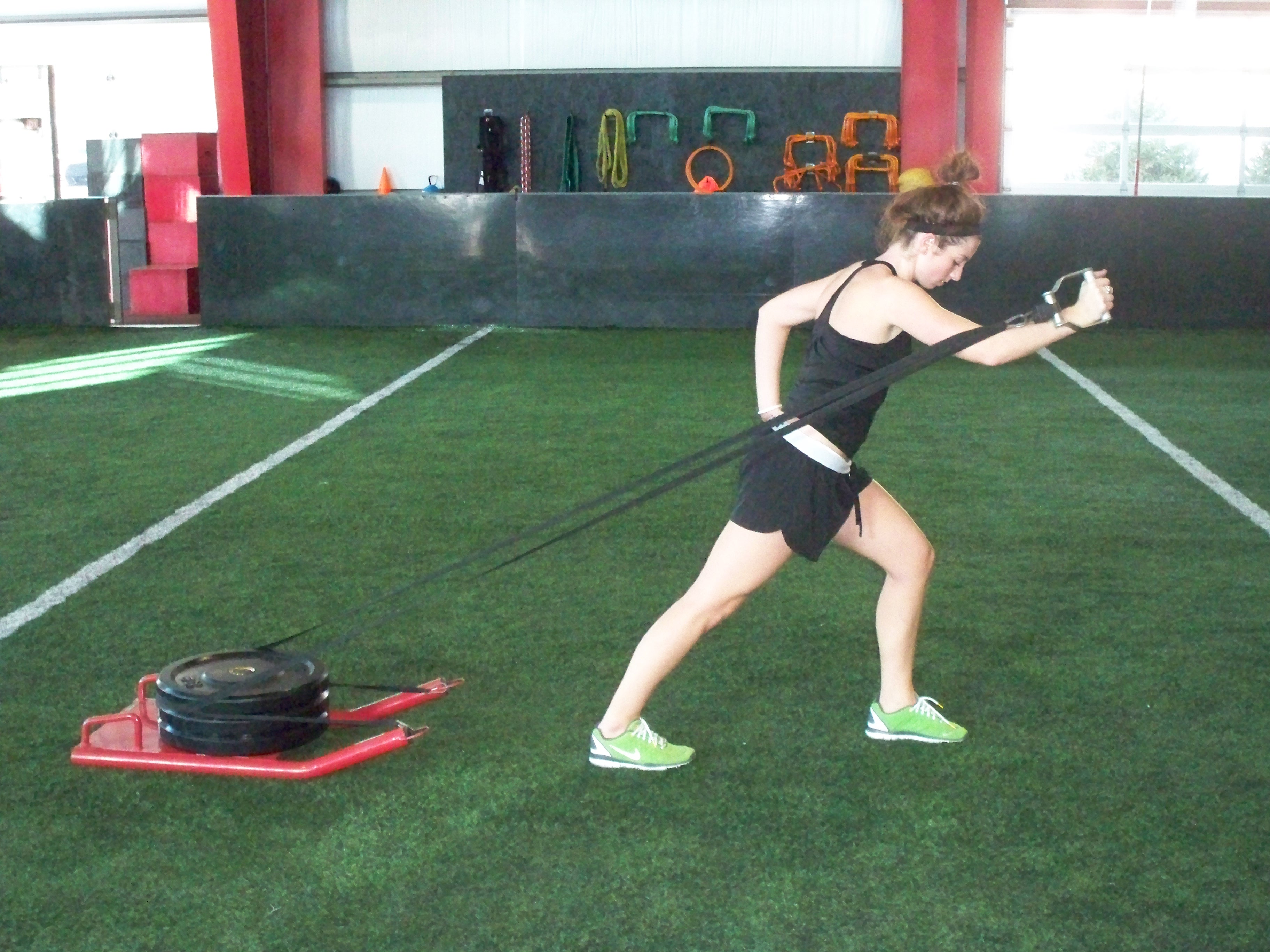
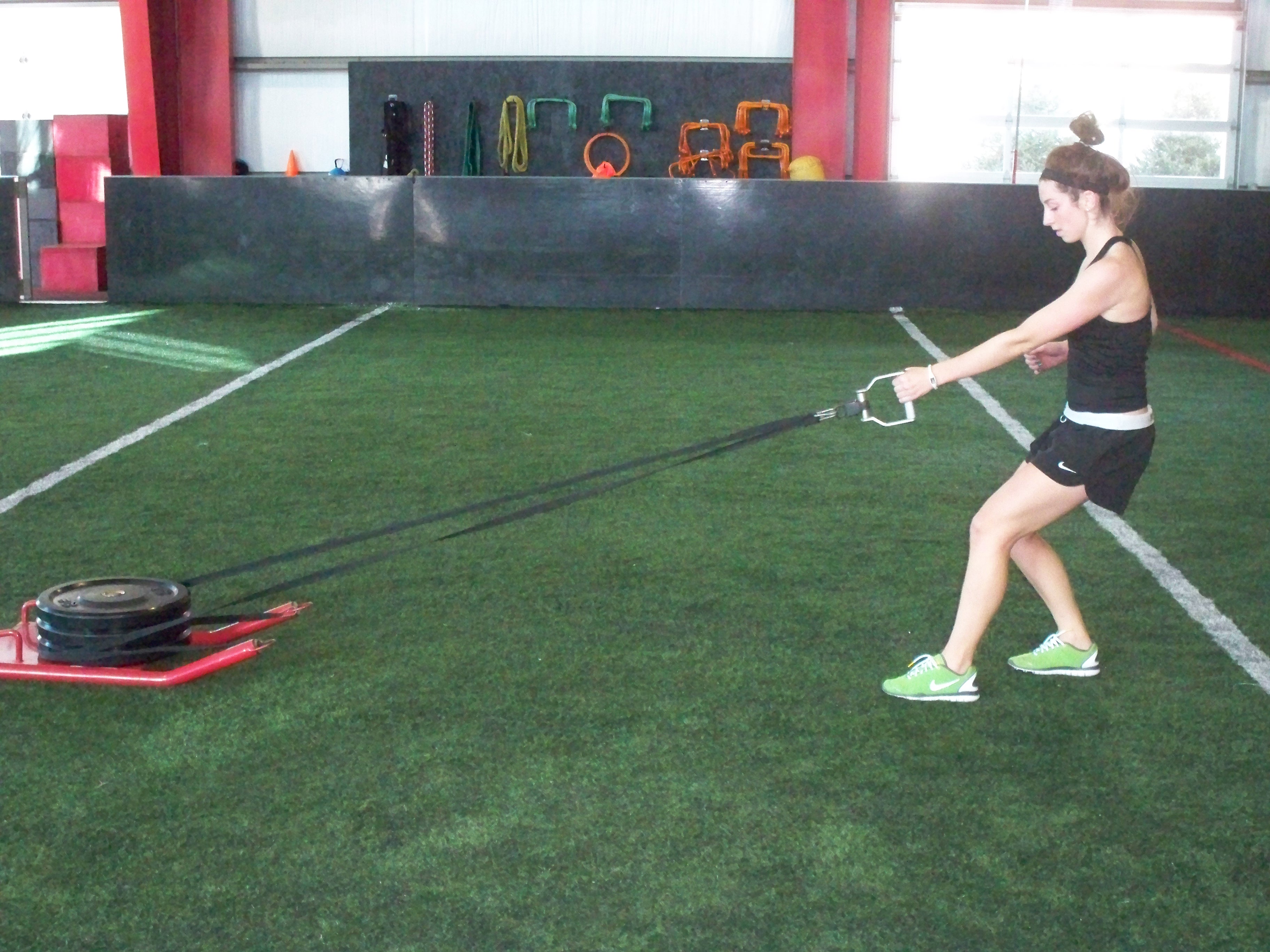
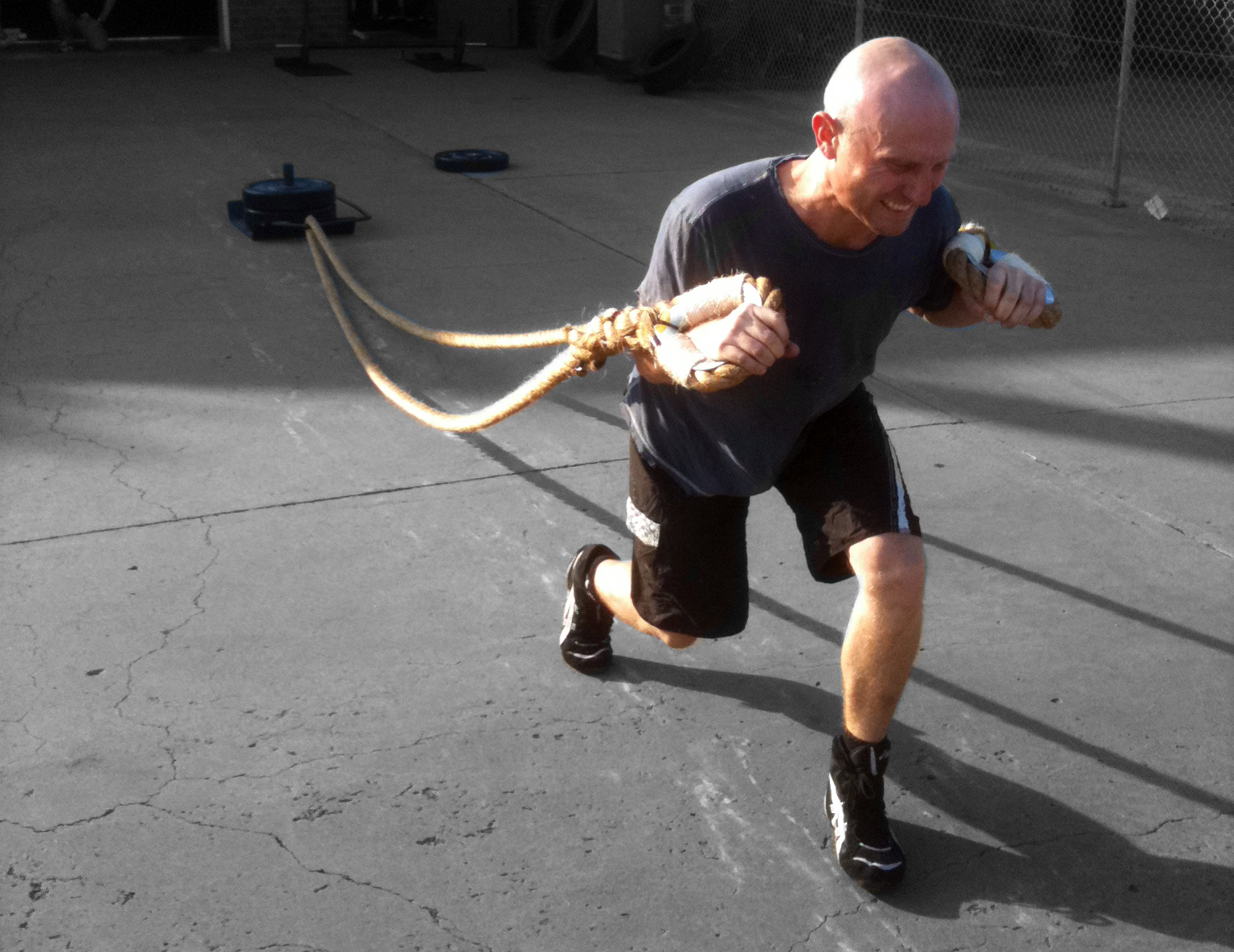
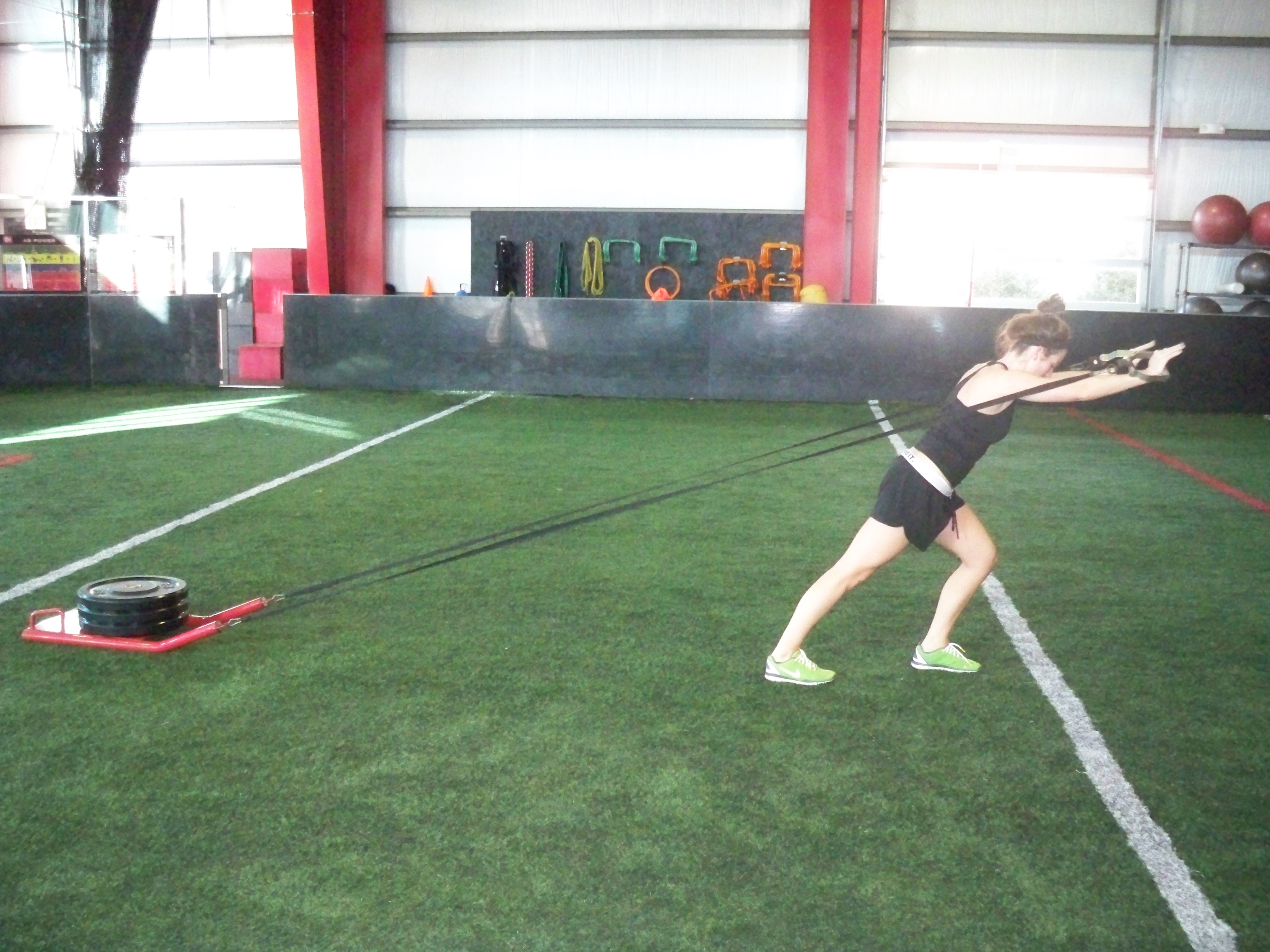
Santa is not the only one to use a sled! The weighted sled can be used in rehab for lower extremity strength, endurance and makes a great core activator. Every patient suffering a significant injury to the lower extremity needs to restore integrated movement, strength, endurance and power. With the sled fastened around the waist and the sled towed behind leg drive and posterior chain strength can be developed for gait and transition into running. It simulates walking up hill without the hill. In addition it will get that heart rate jacked in a hurry! Walking backward will really fire up the quads. Now to use the sled for core strength and activation, I just put handles on the ends of the ropes where the waist band attaches. We can now repeat our walks holding the arms chest level or outstretched in front.
The resistance is now pulling back through the arms that have to be stabilized by the core as your legs are still driving forward, not to mention an even greater metabolic demand! Walking forward activates more of the abdominals and walking backwards (holding the handles) will activate more of the posterior core muscles. It also give you some additional bonus shoulder and arm work. A shoulder harness is a great alternative to the handles although not as demanding.
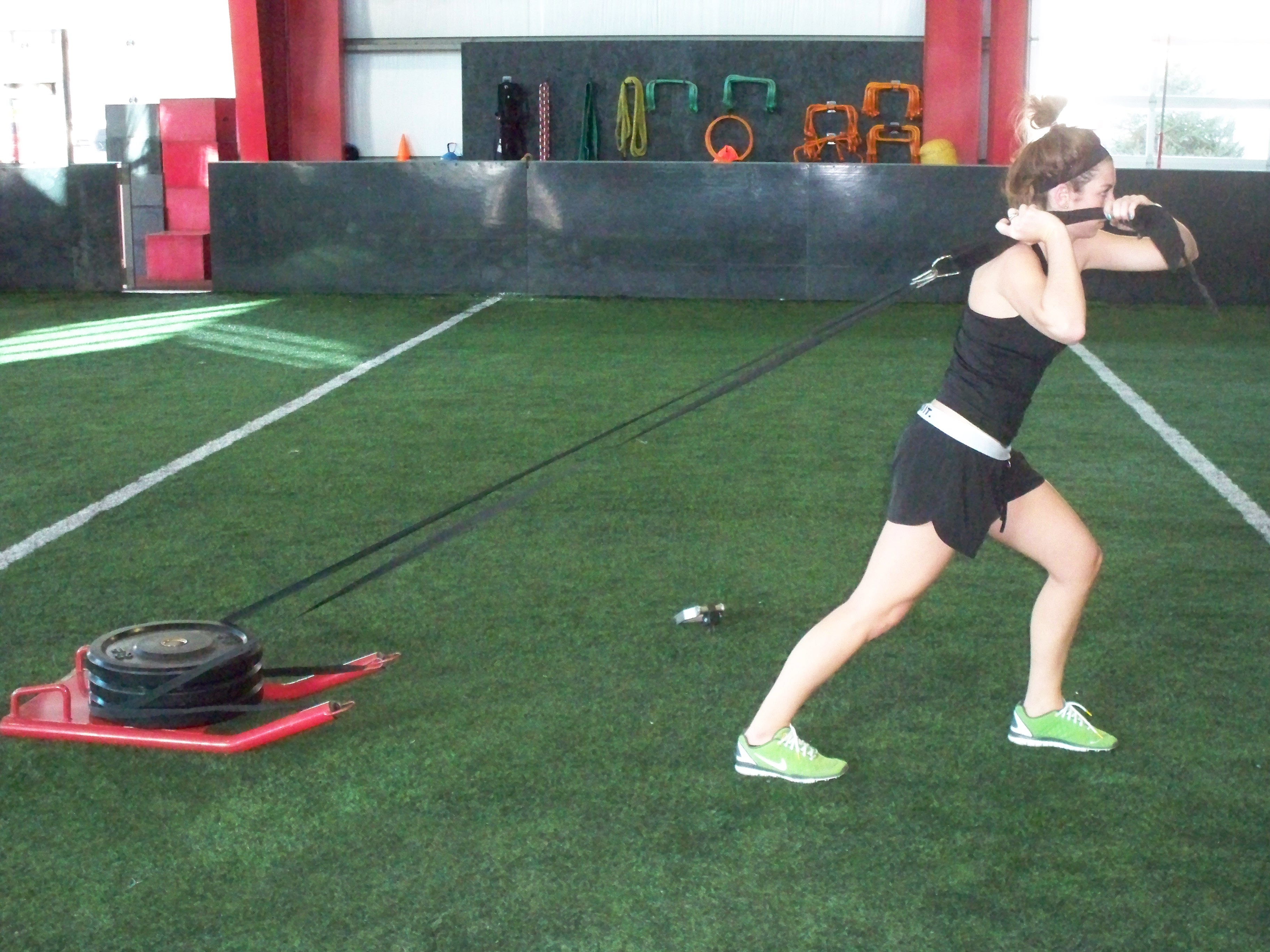
I am a big fan of asymmetrical loading due to the increased demand for stability and its relation to "real life" activity/movement. So, here are just a few of many tweaks to the sled I use.
1 arm push 1 arm pull over shld pull
So, as you can see (hopefully) these exercises can be used in rehab for the upper extremity, core or lower extremity.
Get Strong! Stay Strong!
Chris