Saturday, March 24, 2012

Aerobics or Wt Training; Which is Better?


A great article from the site of Charles Staley 
Ever since the "jogging craze" of the '70's, aerobic exercise has been the method of choice for those attempting to "lose weight." Gradually, the resistance training area of most gyms and clubs is being scaled back to accommodate all manner of equipment designed to elevate the heart rate. With the aerobic revolution in full gear, I feel compelled to ask, "Why are people getting fatter and fatter?"
For those who have critically studied sport training and exercise physiology, this is a rhetorical question.  A quick look at any national level track meet speaks volumes about the effects of aerobic versus anaerobic training.  Compare the physiques of 100 meter sprinters against long distance runners, such as marathoners. Although sprinters do little or no aerobic exercise (it's not specific to their events), they are just as lean (if not leaner) than their aerobic counterparts. They also have more attractive physiques, which is a by-product of the muscle they've gained from hours in the weight room and short-term, intensive running. By contrast, the marathoner's lack of muscle gives him a "flat" physique. His extensive and frequent forays into the aerobic zone have caused his body to lose muscle (since muscle weighs more than fat, it is the body's preferred tissue to cannibalize in the interest in lightening the load).  If you've been trying (unsuccessfully) to lose 10 to 20 pounds of unwanted fat, despite spending hours upon hours on the stairclimber, read on. Anaerobic exercise may not be politically correct, but it IS physiologically correct—if fat loss is your objective.
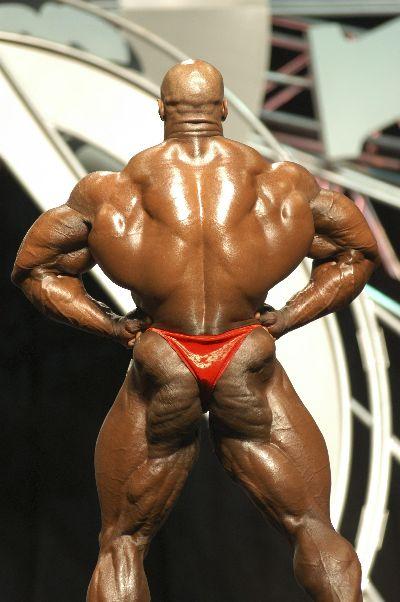
Since our language affects the way we think, let's begin by revising our vocabulary for a moment. I'd like to encourage you to delete a few words from your personal dictionary. Words like tone, shape, contour, sculpt, and all the rest of the vague descriptions you hear on late night infomercials. These terms are irrelevant with respect to the adaptations you can expect from any form of exercise. In reality, there are only two bodily tissues that you have two ways: You can gain, or lose. (By the way: tone simply refers to a state of partial, involuntary contraction, a result of muscular work. Even the most rotund can have muscle tone, and the thinnest people sometimes have no tone.)  So the goal is to gain muscle and lose fat. When you do so, let everyone else call you toned and sculpted.  Of course, many people, influenced by the exceedingly massive (and rare) physiques adorning the covers of muscle magazines, shirk at the prospect of gaining muscle. It's a shame— myophobia keeps more people from achieving their fitness goals than any other single factor. Just a few pounds of added muscle can make a dramatic difference in your physique, not to mention your health and well-being. Muscle (unlike fat) needs calories to survive. The more muscle you have, the higher your metabolism will be. Bigger muscles burn more calories than smaller ones, even during sleep!
Personal trainers— people who earn their living by making substantial changes in their client's bodies— regard resistance training as the most important item in their professional "toolbox." Dave Sinnot, trainer of many top Hollywood stars, including Sean Penn and Angela Bassett, is amazed at people's avoidance of weight training: "People who think that aerobic training is the ultimate fat loss method are totally missing the boat. I've worked with people who spend half their waking hours doing some form of aerobics.  They complain that they aren't getting results anymore. As soon as we shift emphasis to weight training and nutritional modifications, they always start improving immediately. It's like their body was begging for it!" Dave related to me that Angela Bassett (star of "What's Love Got To Do With It") was not blessed with great genetics as many people assume, and was actually "pudgy" when he started working with her.  What's the best approach for people wishing to improve their body composition? First, don't eliminate your aerobic sessions. It's a good practice to do a handful (three or four) of 20 to 40 minute sessions a week. More than that, and your body starts to drop valuable muscle in an effort to adapt. Second, take another look at your resistance training program. Most people simply don't spend adequate time and effort in the weight room, and those that do make one or more of the following four mistakes:
1) Too many exercises: One exercise per muscle group per workout is plenty. The key is to pick the right exercises, and work them hard. Forget about "hitting the muscle from different angles" and "shaping" exercises— this is all propaganda stemming from bodybuilding circles.
2) Ineffective exercises: Don't avoid so-called "hard core" exercises for fear of getting a result. Choose multi-joint exercises, such as squats and their variations, bench presses and their variations, lat pulldowns, and shoulder presses. Smaller muscles such as biceps, triceps, and calves will receive adequate exercise when you do the multi-joint movements mentioned above.
3) Insufficient intensity level: High reps DO NOT "tone" a muscle! For beginners, high reps are important to strengthen connective tissues, and to allow for technique mastery. But for optimum muscle building, stay in the 6 to 12 range for the majority of your workouts. If and when you get to the point where you don't want additional muscle, just cut back on the volume and frequency of training.
4) Lack of progression and variety: If you don't seek increases in strength, your body will stop responding. Similarly, if you train in exactly the same manner for extensive periods of time, your body will adapt to the monotony, and stop responding, no matter how good the training program is. For this reason, there is no perfect training program. Most successful trainers use several programs, which they rotate as needed.
As a final suggestion, remember that the entire personal training profession was founded upon the fact that resistance training works! Don't make the mistake of thinking that you're beyond benefiting from one. Personal trainers make their living by getting fast results for people. For information on finding a certified trainer in your area, please call the ISSA at (800) 892-ISSA.
Consider These Facts:
1) According to a recent study presented in IDEA magazine, the average female aerobics instructor has 18% bodyfat. This is higher than the average female competitive weightlifter (16%).
2) According to a recent study published in Muscular Development magazine, muscle necrosis (tissue death) and inflammation can be observed in the calves of marathon runners 7 days after a race.
3) According to Dr. Marc Breehl, a leading anesthesiologist specializing in cardiac surgery, the enlarged hearts of aerobic athletes are weaker, not stronger than those with anaerobic backgrounds.
4) Resistance training has numerous benefits to the heart and vascular system, including improved ejection fraction of the left ventricle, and improved elasticity of the arterial walls. This from Power: A Scientific Approach, by Dr Fred Hatfield.
5) Virtually everything we do in life is anaerobic. Aerobic activity is an artificial state which the human organism is not well adapted to. For the majority of individuals, loss of function associated with aging is due to lack of strength, not aerobic capacity.
Like I always say:   Get Strong Stay Strong!
Chris

Friday, March 9, 2012

Don't Let an Ankle Injury Slow You Down!


A strained muscle, sprained ankle or foot injury can make even the most motivated exerciser feel discouraged when it comes to working out.

But being injured doesn’t necessarily mean you can’t exercise, says Colleen Greene, wellness coordinator with MFit, the University of Michigan Health System’s health promotion division. By speaking with an expert and finding a plan that will work as you heal, you can still hit the gym while recovering.

“Exercise can definitely be beneficial for a person dealing with an injury. Depending on its type, the injured area should be moved and not left in place for a long period of time,” explains Greene. “Some people think they should just rest and not move at all with an injury. Doing that can actually be worse because—depending on the amount of time one does not move the appendage— the muscle might begin to atrophy.”

Greene notes that the general rule of thumb when initially handling an injury is to follow RICE—Rest, Ice, Compression and Elevation. Once you have done this, consult a doctor to look at the injury as soon as possible. You may be referred to a physical therapist or specialist trainer if the injury is severe enough. These professionals can provide guidance for your recovery, as well as give you tips on how to maintain strength while recovering.

Greene also notes that there are “dos and don’ts” when it comes to specific injuries. Because each condition is unique, there are certain things a person can do and other activities the injured person should avoid while healing. She offers these tips on three common injuries:

General advice for any injury: See a physician or physical therapist to learn what exercises are possible with your type of injury. Focus on the goal of maintaining strength, not gaining it, while you are recovering. And always be wary of pain as you explore different workouts.

“Pain is always the indicator; discomfort is OK, but pain tells you when you should stop what you are doing and do something else,” Greene says. “You always want to keep in mind that you should be doing something that doesn’t re-injure or further injure yourself.”

Sprained ankle. When seeking out cardiovascular exercises, Greene suggests sticking with low- impact workouts, such as swimming or riding a stationary bike. She notes that running or aerobics are generally activities that are too high in impact. A person with a sprained ankle can also do upper-body or core impact exercises for strength training.


Plantar faciitis. Plantar faciitis is an overuse injury normally caused by a lack of cross training. For example, a person may develop plantar faciitis by only running when training for a marathon, but not preparing through other exercises, such as swimming or biking. Greene notes that people dealing with this type of injury need to focus on resting in order to heal, but it is possible to explore low-impact core and upper-body exercises while recovering.


“There are not a lot of ways other than physical therapy to recover from plantar faciitis except for resting,” she says. “You want to do things that are low impact without a lot of pressure on the area.”

Grab an ice pack, get some rest and allow your injury to fully recover before trying to get stronger.

Strained and pulled muscle. “The first thing a person with a pulled or strained muscle should know is that they, like everyone, should warm up thoroughly before doing anything,” Greene notes.


She also says that people with this type of injury should stay in a pain-free range by focusing on conditioning the side of the body opposite of the strained or torn muscle. If you have pulled a hamstring, for example, then aim to work on your upper-body.

Greene also notes that there are preventative measures that a person can take to avoid pulling or training a muscle. First, Greene recommends a good warm-up for five to 10 minutes. Second, be sure to cool down at the end of your workout. And don’t forget to stretch.

“We find that as people age, they can actually pull muscles by doing everyday things such as bending over to grab a bag of groceries or leaning over to put something on a shelf,” she explains. “So the preventative measures that can be taken to avoid pulling or tearing a muscle with exercise are also measures that should be taken to avoid tearing or pulling a muscle in everyday life, not just on a basketball court.”

Overall, Greene believes the most important thing injured exercisers can do when hitting the gym is to pay attention to their body. She also advises to stop immediately if a workout becomes painful.

“One of the basic exercise myths is ‘no pain, no gain.’ We used to think that a long time ago,” says Greene. “If you are actually in pain, you should stop immediately. Now we say, ‘no discomfort, no gain.’ There is a big difference.”

—————————-
Article adapted by MD Sports from original press release.
—————————-

MFit, the Health Promotion Division of the University of Michigan Health System (UMHS) provides medically-based personalized health and wellness programs and services to UMHS patients, UM employees, the greater Washtenaw County community, and employers in Michigan.

Source: Laura Drouillard
University of Michigan

Get Strong! Stay Strong!

Chris

Monday, February 27, 2012

Fill Your Pie Hole in the A.M.!


Everyone knows that breakfast is the most important meal of the day but how many of you 
actually eat it?  Breakfast literally means “break the fast”.   After going 6-8 hrs without food
the body is actually “starved” for nutrients. During sleep the body uses the available
nutrients for repair and recovery ( thats assuming it has quality nutrients in the first place).  So, when you wake up the tank is empty.  If you don’t refuel with a nutritious breakfast your body will rob your lean muscle stores to get what it needs to maintain itself.  Or has a poor supply of nutrients from eating crappy food.  This can lead to decreased strength and performance, in addition to mental and physical fatigue. It’s important that breakfast include protein, carbs, good fats and fiber.  Do your body good (it has to last a long time) and start the day off right!
Eat breakfast.  A good wholesome breakfast, not some processed garbage.
Get Strong! Stay Strong!
Chris

Sunday, February 26, 2012

Tennis or Golfers Elbow Anyone?


Elbow pain can be a painful and debilitating problem. Pain located on the medial side is referred to as “golfers elbow” or  medial epicondylitis and pain that is on the lateral side is often referred to as “tennis elbow” or lateral epicondylitis. 

Now you don’t have to play golf or tennis to develop these problems. Pain in the elbow usually occurs as a result of repetitive use from typing, hammering, grip/ lifting or swinging a club or racquet. It can occur over time or with a sudden episode.

 Symptoms include pain with; grip, turning door handles or car ignition, fully extending or bending arm, typing, using the mouse.  Swelling and tenderness are also present. Pain can range fromminor irritation to significant limitations in use of hand/ arm.

Often times treatment includes limitation of exacerbating activity, stretches, use of a forearm strap and various pain modalities like ice, electrical stimulation and iontophoresis.  Iontophoresis is a treatment that utilizes an electrical current to drive a medication into the target tissue. We have found this to be quite effective in decreasing pain. This particular treatment requires a doctor’s prescription and is administered by the physical therapist. 

We have also found that stretching and strengthening the hip further enhances the recovery from elbow pain. The hip you ask? Yes, the hips (and trunk) are the power generators for the body. Think of hitting a baseball, swinging a golf club or tennis racquet. In order to swing, lift, push, or pull forcefully you must rotate the hips and trunk to increase force generation. If unable to load the hips/trunk due to weakness or limited motion (tightness) you will likely compensate by using the arm muscles more. Over time this can lead to tissue stress and “bam” the elbow starts to hurt. By improving hip mobility and the working relationship between the elbow, shoulder, trunk and hips we have seen marked improvement in our ability to address this painful condition. Due to the fact that we sit a lot and sleep in the fetal position our hips naturally get tight and develop muscle imbalances. Like we always say, “it’s all connected.”   

Seeking a rehab professional who understands function and the relationships of human movement can greatly improve your chances of overcoming your elbow pain.

Get Strong! Stay Strong!

Chris


Friday, February 24, 2012

Get Your Booty to "Bark"! Muscle Function


OK, since I enjoy talking about function and biomechanics lets talk about how to turn on your butt!  Thought that might get someones attention.  Any way, the Gluteal/hip/ butt muscles are the "powerhouse" muscles.  We call them the big house or the cannon.  The first thing to do before "shooting" the cannon is to "load" the cannon.  In function this simply means you need to efficiently load (eccentrically)the gluteus muscles in order to effectively unload or more forcefully create a concentric contraction.  During the loading or pronation phase ( front foot hits the ground in lunge or gait)
   the function of the gluteus muscles (max, min and med) is to eccentrically control hip flexion in the sagittal plane, hip adduction in the frontal plane and femoral/hip internal rotation.  If you look at an anatomy picture of the gluteus maximus you will notice that the fiber orientation is primarily in the transverse plane.  This baby was designed for femoral/hip rotation (a significant component of lower extremity pronation)
The gluteus attaches proximally to the saccrum and the illiac crest and distally to the greater trochanter and blends with the tensor fascia latae (TFL) to form the illiotibial band.  The ITB attaches distally to the anterior/lateral aspect of the tibia.
So, for example, when you are walking and your foot hits the ground and begins to pronate, the calcaneus everts causing the tibia to advance forward and internally rotate (see "When Foot Hits Ground" post).  This creates a quick "pull" on the ITB, which creates a quick stretch on the gluteus thereby stimulating the butt to contract.  This is further accentuated by the femoral internal rotation that also eccentrically lengthens the gluteus maximus.  Remember that neurologically a muscle responds to a quick stretch (eccentric load) by concentrically contracting. Therefore, if one has limited calcaneal eversion (after ankle injury or immobilization) they will not be able to effectively and efficiently turn on the butt which leads to compensation and further problems.  There in lies the beauty of function!
Get Strong! Stay Strong!
Chris

Sunday, February 19, 2012

What Do the Adductor Muscles Really Do?


Despite their name, the adductor muscles work primarily as strong sagittal plane hip flexor or extensors. For example, if you are walking (or running) and the right leg is forward, the right adductor works as an extensor and the left as a flexor and then they switch as you alternate legs in the cycle. Have you ever went out and ran or sprinted for the first time? Where did you feel sore? Right, in the groin and inner thighs (as well as the rest of your body if was your first time).
The adductors (generally) attach proximally to the pubic bone and distally attach to the posterior medial aspect of the femur, giving them their mechanical advantage in the sagittal plane. In single leg stance or the single leg phase of gait running or kicking they work with the gluteus medius and the quadratus lumborum to stabilize the pelvis and limb in the frontal plane on the stance side. Now, in activities such as gymnastics, ballet, and karate where the leg is lifted or rapidly "thrown" out to the side the adductors will actually adduct the leg to bring it back into position to hit the ground.
Due to its atachment to the pubic bone, the adductors when activated, can stimulate (turn on) the pelvic floor muscles.  So, squeezing something between the legs while doing a bridge or squat for example can increase pelvic floor activity, which is important for women who have had multiple childbirths and people with core stabilization issues.
Some examples of functional exercises that activate the adductors include:  lunges - forward, lateral and posterior lateral w/ rotation, step up w/ opp. leg hip flexion (w or w/out resistance from cuff or cable), single leg balance w/ opp. leg reaches, and resisted walk, jog or running (cable, bungie, sled).
Once you understand what the bones are doing in all 3 planes (against gravity, ground reaction forces and momentum) and you know where the muscle attaches proximally and distally, you can begin to figure out its true function and design exercises to actually improve the bodies abilitiy to move.  Unfortunately, school doesnt usually teach us that.  Think back to anatomy.  We are taught that the adductors adduct the leg.  Well, now we know that in function they rarely ever do that!  Good luck and have fun!  There is always more to learn!
Get Strong! Stay Strong!
Chris

Friday, February 17, 2012

Secret Weapon to Burn Fat and Pump Your Muscless


If you want a piece of equipment that can provide, strength, power, fitness and fat loss all in one check out the video below and stay tuned for some cool PT/fitness applications!  My patients love it.  Our athletes, pro and amateur, love it!  Check this out!  And you guys thought I forgot about the PowerMax!  Still cranking on it daily.


Get Strong! Stay Strong!
Chris